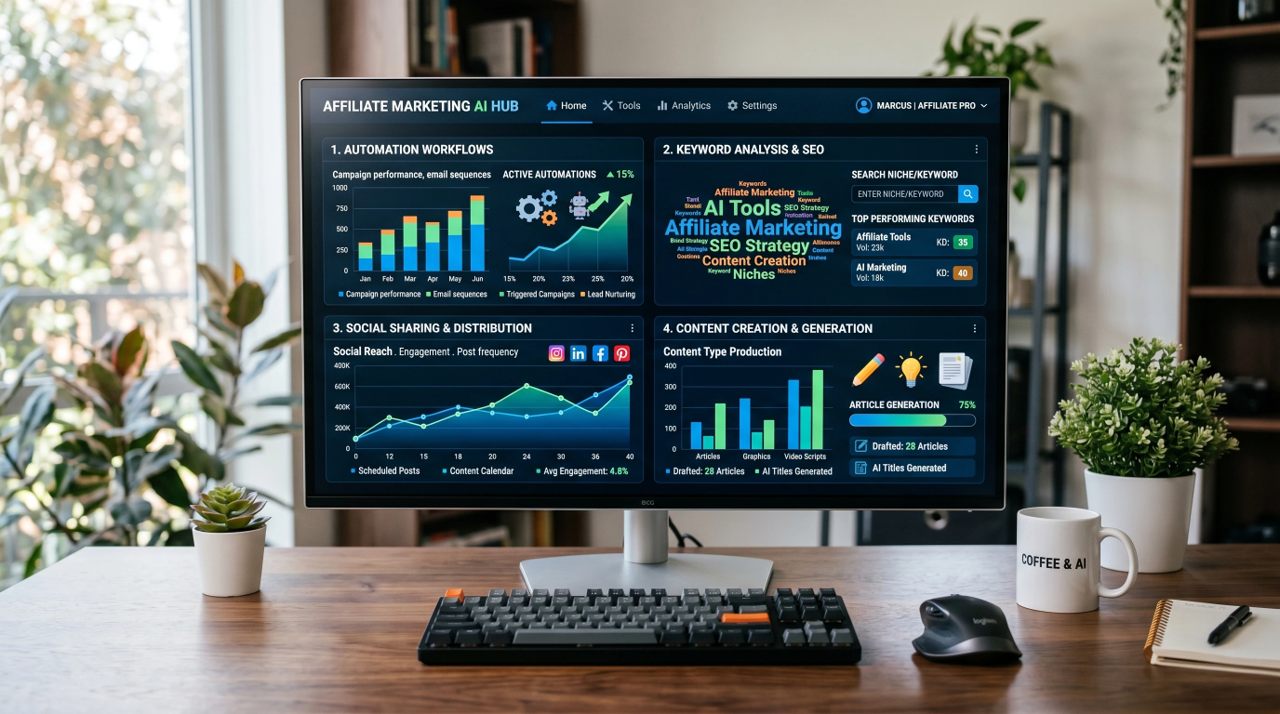
Artificial intelligence continues to change how affiliate marketers work, making it easier to find the right products, create content, and boost earnings. In 2026, the landscape is packed with even more smart tools that automate tasks, help me make sense of data, and allow me to get better results with less effort. Even if I’m new to affiliate marketing or just looking to keep up with the trends, tracking down the right tools can save me time and increase my income.
Trying to juggle research, content creation, audience tracking, and working across multiple affiliate platforms can get overwhelming. I’ve spent a huge amount of time testing and reviewing tools to help take some of that weight off my shoulders, and what I’ve found is that using the right AI tools doesn’t just make things quicker. They make my affiliate business more profitable and much more consistent.
This guide shares my top recommendations and how each helps me improve my affiliate marketing game in practical ways. I’ve broken down everything from keyword research to AI-driven analytics, and added some tips for choosing what will work best for different budgets and needs.
Understanding AI in Affiliate Marketing
AI tools use machine learning and automation to handle tasks that would usually take me hours or days. For affiliate marketers in 2026, this means I can focus less on manual research and more on building relationships and growing my audience. Here’s where AI has made the biggest difference for me:
- Content Creation: AI tools help me generate eye-catching articles, reviews, and emails based on data and trending topics.
- Keyword Research: AI-powered keyword tools track down opportunities I might miss on my own, picking up longtail keywords and search trends as they switch up.
- Analytics and Reporting: Automated platforms track how my campaigns perform, alerting me to what’s working (and what’s not) in real time.
- Personalization: AI segments my audience, so I can deliver more targeted recommendations and promotions that boost conversions.
This combination of time saving, accuracy, and smart suggestions gives me an edge in a popular field, and helps turn affiliate marketing into a more consistent source of income. Since AI tools keep spreading like wildfire and developing, I’m always on the lookout for new features and updates to help give my business a boost.
Choosing AI Tools for My Affiliate Marketing Goals
It’s crucial to pick tools that fit my specific affiliate goals, my audience, and even my preferred platforms (like blogs, YouTube, or social channels). I usually start by asking myself:
- Am I struggling most with content, research, tracking, or outreach?
- Is my budget flexible, or do I need free and lowcost tools?
- Do I need a tool with lots of features, or would something simple be easier to start with?
Seeing how each tool lines up with my workflow makes a big difference in longterm results. I recommend testing a few before deciding, as even small changes in workflow efficiency can lead to major improvements in both traffic and conversions. Taking time to check out demo versions and user reviews can help make the right choice.
AI Content Creation Tools for Affiliate Marketers
Creating fresh, SEO friendly content is what moves the needle in affiliate marketing. In 2026, these AI content tools stand out for affiliate marketers looking to scale up fast:
1. Jasper AI
- Main strength: Generates humanlike blog posts, product reviews, and copy in my brand’s voice.
- How I use it: I enter a topic or a few seed keywords, and Jasper helps me build structured articles, email sequences, or scripts for video content.
- Time saved: About 60% less time spent per post, plus consistent quality keeps my readers interested.
2. Content at Scale
- Main strength: Produces longform content that actually ranks, including pillar pages and detailed product reviews.
- How I use it: I set my target keywords and preferred content type, and the tool drafts indepth posts ready for my final tweaks.
- Extra benefit: It handles internal linking suggestions, which helps with site SEO.
3. Writesonic
- Main strength: Great for quick promotional content, landing pages, and ad copy.
- How I use it: I select a template, fill in the product or offer details, and adjust the tone or style as needed.
AI writers help me keep up a regular publishing schedule without burning out, and I’ve noticed higher affiliate link click through rates when my content is timely, regular, and relevant. To keep things eye-catching, I like to add unique graphics, check for the latest niche trends, and experiment with different content themes.
AI Powered Keyword and SEO Tools
Getting my content seen is a challenge, especially in popular niches. These AI-powered keyword tools help me track down traffic opportunities and optimize for SERPs (search engine results pages):
4. Surfer SEO
- Main strength: Real time optimization for any content I write. Compares my articles to top ranking competitors and makes actionable suggestions.
- How I use it: I paste my draft, and Surfer gives me a checklist for keywords, structure, headings, and more.
5. Frase
- Main strength: Full content briefs powered by AI driven research. Highlights questions my audience is actually searching for.
- How I use it: I enter my keyword, and Frase outlines the most important topics, FAQs, and ranking challenges.
6. SEMrush AI toolkit
- Main strength: Deep site audits, keyword opportunities, and AIbased suggestions for on page improvement.
- How I use it: I check for SEO gaps, run audits on my content, and spot trends ahead of my competitors.
When I use these tools together, I see my affiliate posts moving up in search rankings and bringing in steady organic traffic. For extra impact, I sometimes blend keyword research with trend analysis to get ahead of new topics others haven’t covered yet.
AI Analytics and Tracking Tools for Affiliate Performance
One of the biggest headaches in affiliate marketing is tracking what works and mixing it up for better results. AI-driven analytics tools help by giving me actionable info, not just numbers:
7. Afflytics
- Main strength: Unified dashboard for affiliate earnings, clicks, and conversions across all my programs.
- How I use it: I connect my affiliate networks, and it pulls all data so I can compare performance. Offers automated alerts for sudden drops or spikes in earnings.
8. Voluum
- Main strength: Real time campaign tracking and AIpowered optimization suggestions.
- How I use it: Tracks traffic sources, devices, locations, and conversion rates so I can double down on what’s working and pause what’s not.
9. Google Analytics AI Suggestions
- Main strength: Uses Google’s AI to shine a light on patterns and opportunities across my website, from user demographics to top converting content.
- How I use it: I check the Insights tab for automated ideas on what to optimize next.
These tools help me act quickly when something changes, improve my content, and boost affiliate sales by focusing on the best performing links and offers. I also like to make a habit of reviewing analytics weekly to pick up on trends before they become major shifts in traffic.
Personalization, Outreach, and Social AI Tools
Automating outreach and making my promotions more personal can lead to higher engagement and conversions. Here’s what I use and suggest in 2026:
10. Chatfuel AI
- Main strength: Creates smart chatbots for lead generation and nurturing, working on Facebook Messenger, WhatsApp, or my website.
- How I use it: Builds quiz funnels, provides instant answers to visitor questions, and delivers affiliate recommendations based on user responses.
11. Smartwriter.ai
- Main strength: AI personalized cold outreach for partnerships and influencer campaigns.
- How I use it: It scrapes prospects’ public profiles and auto generates tailored messages, making outreach faster and more relevant.
12. LatelyAI
- Main strength: Turns blogs or podcasts into dozens of social media posts with built-in affiliate links and hashtags.
- How I use it: I upload my latest content, and Lately creates a week’s worth of social snippets ready to post, or schedule automatically.
AI outreach tools help me build more real connections, while social media tools make it easy to stay visible without spending hours every day planning and posting content. Combining several tools allows for better follow-up with leads and keeps my audience coming back for more.
Budget Friendly and Free AI Tools for Beginners
Starting out in affiliate marketing doesn’t always leave space for paid tools, but there are some great free or affordable options I recommend if I’m on a tight budget:
- Google Bard and Gemini: Free from Google and useful for brainstorming, quick info gathering, and basic content creation projects.
- Ubersuggest AI: Budgetfriendly keyword and site audit tool with AI-driven suggestions.
- Canva AI: Free tier includes basic AI design tools for graphics, banners, and social posts with affiliate calltoactions.
Using these tools is a smart way to grow an affiliate business without spending money right off the bat. Upgrading to paid plans can always come later as I see results and want more advanced features. Even with the free versions, I can publish eye-catching content that helps bring in my first commissions.
How to Stay Ahead with AI in Affiliate Marketing
AI tools keep leveling up, which means staying uptodate is really important. Here are a few strategies I use to stay ahead of the game:
- I sign up for newsletters and user groups from my favorite AI brands to get updates on new features.
- I test new tools in small campaigns before adding them across all my projects to be sure they fit my strategy.
- I regularly review my tool stack every few months so I know I’m not missing out on better, faster, or more affordable options.
- I follow affiliate marketing forums and subreddits to see what other marketers are putting to work in real time.
Consistent research helps me make smart decisions and adapt faster when a new tool or feature could give my results a boost. Staying in touch with the community can turn up secret gems and creative ideas I wouldn’t find on my own adventure.
Common Questions About AI Tools for Affiliate Marketing
How do I choose the right AI tool for my needs?
- I start by listing my top challenges: content, outreach, analytics, or something else. Then, I test a free trial or demo to compare features and user experience.
Are AI tools expensive?
- I’ve found budgetfriendly options in almost every category. Free versions exist, but investing in at least one paid tool has usually paid off in less time and higher commissions.
Can AI-generated content hurt my site’s SEO?
- Quality and originality matter. I always edit AI drafts, add a personal touch, and make sure my content is useful so that my rankings stay strong.
Will AI tools replace affiliate marketers?
- AI helps, but I still bring the creativity, strategy, and personal connections that AI can’t fully copy.
Action Steps for Affiliate Marketers in 2026
AI can give my productivity a serious boost, save me time, and help me stumble upon new opportunities I wouldn’t find on my own. The key is to start small: add one tool to my workflow, measure the results, and build from there. Here’s my process:
- Pick one or two pain points where I’d like to improve or save time.
- Sign up for a free trial from the tools that meet those needs.
- Put the tool to work for one week, focusing on real affiliate promotions or campaigns.
- Review what’s changed: faster research, better engagement, more clicks. Then decide if it’s worth using longterm.
If there’s a tool from this list that stands out, now’s the perfect time to try it. I’d love to hear which AI tools are helping you most, or which ones you’re excited to track down and test for your own affiliate journey!