
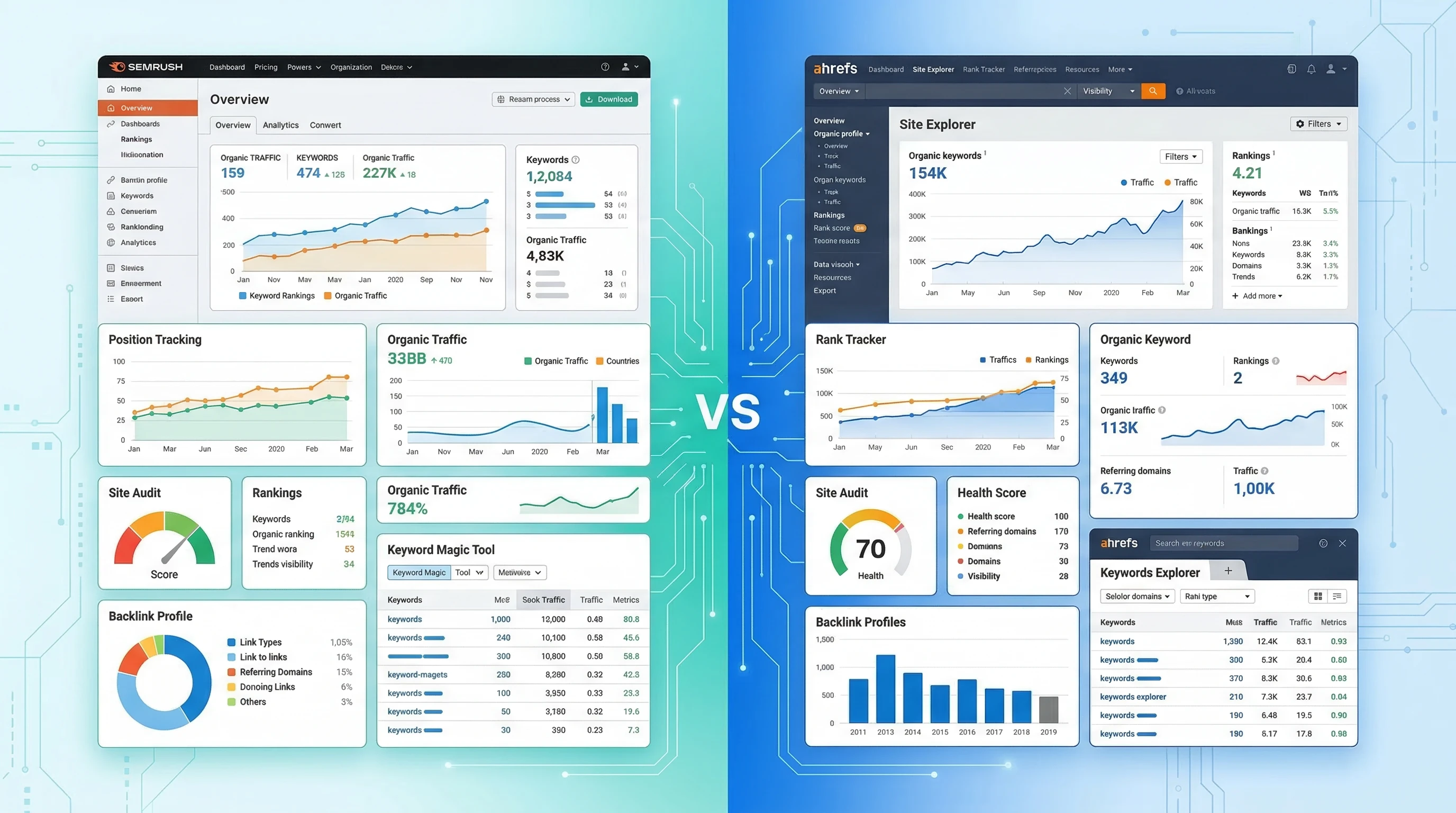
When it comes to SEO tools for affiliate marketers, two platforms stand out: SEMrush and Ahrefs. Each one provides a suite of features for keyword research, competitor analysis, site audits, and a lot more. With their many overlapping capabilities, deciding which platform works best for affiliate marketing can feel tricky.
SEMrush is often praised for its powerful allinone toolkit, covering everything from content marketing to technical SEO and competitive intelligence. Ahrefs focuses more on backlink analysis and keyword research, building a reputation for its accuracy and large data index.
If you want to pick the right SEO platform for your affiliate marketing efforts, I’ll break down the differences between SEMrush and Ahrefs. I’ll check out features, pricing, and ease of use, and share which tool lines up with different affiliate strategies.
Understanding the Contenders
What is SEMrush?
SEMrush is an allinone digital marketing suite. It offers tools for keyword and competitor research, site audits, content optimization, rank tracking, social media, and even paid ads insights. SEMrush tries to cover the needs of a full marketing team, but for affiliate marketers, its competitive research and keyword analytics are especially useful.
Who Should Use SEMrush?
- Affiliate marketers who juggle SEO, content marketing, and paid ad campaigns all at once
- Anyone who needs deep insights into competitors’ strategies
- People managing multiple websites or campaigns
SEMrush Pros & Cons
Pros:
- Extensive suite beyond just SEO
- Excellent for tracking competitors
- Built-in content marketing and PPC tools
- Strong site auditing capabilities
Cons:
- Interface can be overwhelming for new users
- Some features cost extra on top of the base price
- Limited historical data unless you upgrade to higher tiers
What is Ahrefs?
Ahrefs started as a backlink analysis tool and grew into a robust SEO platform. The main strengths include keyword research, competitor monitoring, and one of the largest backlink databases. Ahrefs puts a focus on site explorer, which gives actionable insights for link building and content ranking for affiliate sites.
Who Should Use Ahrefs?
- Affiliate marketers who focus heavily on link building
- People who care most about accurate keyword and traffic data
- Anyone who wants straightforward, reliable SEO tools without added distractions
Ahrefs Pros & Cons
Pros:
- Leading database for backlinks
- Very accurate keyword data and traffic estimates
- Userfriendly, clean interface
- Fast and detailed site audit reporting
Cons:
- Fewer features outside core SEO (no builtin PPC or social tools)
- Lowertier plans have strict usage limits
- No whitelabel reporting without toptier plans
Comparing Features That Matter Most to Affiliate Marketers
- Keyword Research
Why This Matters: Affiliate marketers count on finding profitable, low competition keywords for their niche content.
SEMrush: Offers a huge Keyword Magic Tool and helpful keyword difficulty scoring as well as longtail suggestions. It also includes PPC data.
Ahrefs: Known for accurate keyword search volume and very detailed phrase match reports. Ahrefs also tracks clicks, not just searches, which is great for seeing real opportunities.
My Pick: Ahrefs takes the edge for keyword accuracy and click estimates, but SEMrush’s keyword tool feels more versatile for broader research. - Backlink Analysis
Why This Matters: Backlinks drive much of affiliate SEO, especially in competitive markets.
SEMrush: Covers the most important backlink metrics and competitor link tracking. Its Backlink Audit tool connects with Google Search Console for extra data.
Ahrefs: Widely respected for having the largest and fastest updated backlink index. Its historical view of lost and gained links makes tracking progress easy. Ahrefs also does well with broken link opportunities.
My Pick: Ahrefs is usually my first choice when link building is a major part of my strategy, mainly because of its larger link database. - Site Audits
Why This Matters: Technical site improvements help affiliate pages outrank competitors and reduce penalties.
SEMrush: Provides a powerful site audit tool that checks hundreds of technical issues, generates easy to understand reports, and prioritizes fixes.
Ahrefs: Has a fast and reliable site audit feature, though its technical reporting is a little more streamlined and targets core issues.
My Pick: Both tools work well, but SEMrush’s reporting is more allinone if I’m managing large or complex affiliate sites. - Content & SERP Analysis
Why This Matters: Understanding what’s already ranking helps me create content that outshines the competition.
SEMrush: Its SEO Content Template and Topic Research tool generate outlines and suggestions based on what’s currently ranking. This is really helpful for planning new affiliate pages.
Ahrefs: Includes content gap analysis and batch analysis. The SERP overview is more straightforward and helps spot content angles.
My Pick: SEMrush makes planning content easier, while Ahrefs spells out gaps and competition in a clear way. Both are helpful, but SEMrush offers more options in one place. - Pricing & Plans
Why This Matters: Affiliate marketers keep a close eye on expenses to stay profitable.
SEMrush: Pricing starts at about $129.95 monthly. Advanced features (such as historical data, branded reports, or extra users) quickly add to the cost.
Ahrefs: Pricing starts at about $99 monthly. Lowertier plans restrict data rows per report or the number of projects you can track.
My Pick: Ahrefs offers a lower starting point, but SEMrush includes more features by default. Costs can add up with both, so I always doublecheck which features I truly need.
User Feedback & Industry Reputation
- SEMrush: Gets strong reviews for its massive feature set and great customer support, though some users say it can feel bloated for smaller businesses.
- Ahrefs: Loved for accuracy and speed. Many users, myself included, stick with Ahrefs for longtime keyword and link tracking because of its focus and simplicity.
Overall Reputation: Both platforms are highly trusted by professionals, but your choice often rides on your strategy and budget.
Which Tool Should Affiliate Marketers Pick?
SEMrush and Ahrefs both bring serious SEO value to the table. My advice comes down to your main priorities:
- Pick SEMrush if you:
- Need an allinone platform for SEO, content research, paid search data, and technical audits
- Manage several sites or clients and want thorough competitor tracking
- Like working within a single dashboard for every campaign
- Pick Ahrefs if you:
- Focus mostly on backlink building
- Want really accurate keyword and traffic estimates
- Need a tool that’s simple to learn, with less clutter
No matter what you decide, the real value comes from how you put the data to work. SEMrush and Ahrefs both offer trials or discounted plans so you can check them out before committing. Make sure to research carefully so you can figure out which fits your workflow best. I’ve used both and often suggest starting with Ahrefs for linkdriven strategies, or SEMrush when you need a wider digital marketing approach. You can always switch it up later if your needs change or your strategy grows.